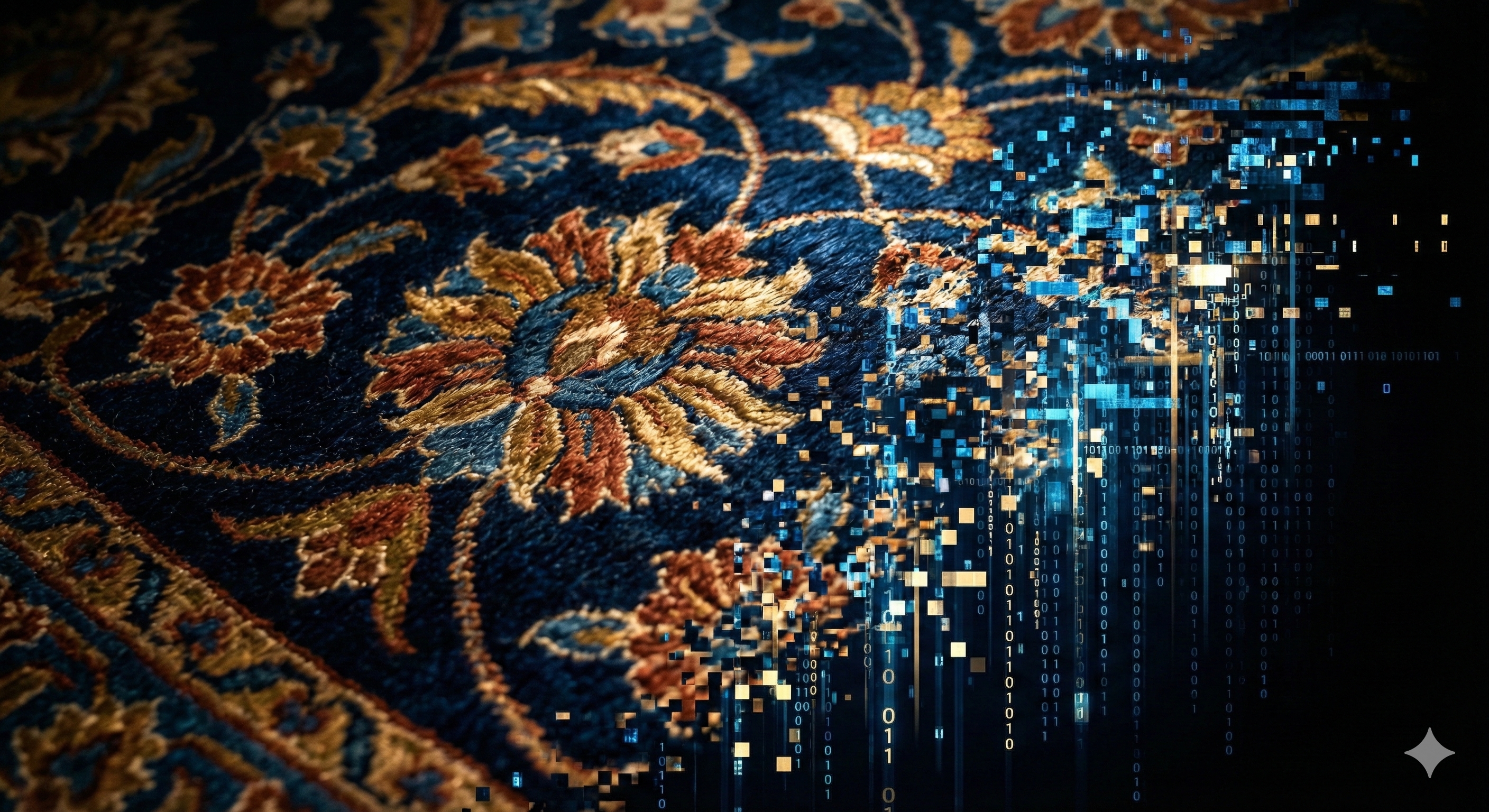
In my previous article, The Neuroscience of Persian Music, we decoded how the specific frequencies of a melody and the geometry of a house act as biological regulators for the nervous system. We explored how art can function as medicine for emotion.
But emotion is only one variable in the equation.
For those joining me for the first time, I must reiterate my confession: I am not a professional musician, nor am I a historian. My background is in Engineering — spanning AI, Data, Software, and Product. I view the world through the lens of pattern recognition.
However, as an Iranian-Kurd heritage from my mom, I have spent my life navigating two distinct operating systems: the high-speed, synchronous clock of the modern tech world, and the deep, asynchronous flow of my ancestors.
…If our last journey was about the Space of Persian culture, this one is about its Time.
The Latency Paradox
In the glass towers of Banking and AI where I spend my days, we worship one god above all others: Zero Latency.
I want you to pause and feel your own pulse right now. If you work in tech, you know the specific anxiety of a “loading spinner.” We spend millions of dollars shaving milliseconds off transaction times. We build “Real-Time” dashboards because we believe that knowing something now is infinitely better than knowing it five seconds from now.
In my industry, “Latency” is a dirty word. But here is the conflict: In the physical world — the one made of atoms, not bits — Real-Time is often just noise.
Think about the signals that actually matter to your life. A deep conversation with a friend does not happen in real-time; it happens in “slow-time.”
A vintage wine is literally just grape juice that has suffered from extreme latency.
We have confused Speed (how fast data moves) with Signal (how much the data matters). By optimizing the waiting out of existence, we have accidentally optimized the meaning out of it too.
The CDP Fallacy
In data architecture, we see this in the implementation of Customer Data Platforms (CDPs). We obsess over real-time ingestion, building pipelines that capture every click, scroll, and hover the nanosecond it happens. We think that if we capture the “event” fast enough, we will understand the customer.
But a click is not a person. A click is an impulse.
Most banking apps treat a user who checks their balance at 2 PM the same as one who checks at 3 AM. A High-Resolution system knows that the 3 AM user isn’t just ‘checking a balance’; they are likely suffering from insomnia or financial anxiety. The response shouldn’t be a generic dashboard; it should be digital empathy.
Clock-Cycle Exhaustion
This obsession has led to a modern condition I call Clock-Cycle Exhaustion.
Our brains are biological CPUs. In the corporate world, we run on a Synchronous Clock. Everything is quantized into 30-minute Zoom blocks, quarterly goals, and two-week sprints. We live in a state of constant “polling” — checking Slack, checking stock prices, checking likes. We are constantly asking the universe, “Is there an update? Is there an update?”
This burns a tremendous amount of metabolic energy. It’s like keeping a car engine revving at 7,000 RPM while sitting in the driveway. You aren’t going anywhere, but you are definitely overheating.
The Persian operating system — embedded in its architecture, music, and poetry — offers a radical alternative. It is Asynchronous.
It doesn’t run on a clock; it runs on Events. It doesn’t optimize for Throughput (how many tasks you can finish in an hour); it optimizes for Fidelity (how much depth you can feel in a moment).
It is an ancient engineering guide to high-resolution living, and it starts by realizing that sometimes, the best feature you can add to your life is a little bit of lag.
To fix this overheating CPU, we need to look at the hardware specs of a culture that mastered heat management centuries ago.
Deadline vs. Texture
To my friends in Physics, I know what you are thinking: “Time is just a coordinate (t) in 4D Minkowski space. It is an a priori dimension.”
To my friends in Finance, I know what you are calculating: “Time is money. Specifically, it is Net Present Value (NPV). A dollar today is worth more than a dollar tomorrow due to the discount rate.”
Both of these worldviews share a fatal assumption: Time is a Depreciating Asset. In Physics, the arrow of time points toward Entropy (disorder). In Finance, the arrow of time points toward Discounting (loss of value). In both models, waiting is expensive.
But the Persian architecture flips the sign on the equation. It views Time as an Appreciating Asset. Like a rug that softens, a wine that matures, or a friendship that deepens, the value doesn’t come from minimizing the duration (t → 0); it comes from maximizing the density of the experience inside it.
To understand why your brain feels fried by 3:00 PM, we need to look at this through three distinct engineering lenses: UX Design, Signal Analysis, and Data Structures.
Analogy A: The Subway vs. The Garden
Think of your daily commute.
The Subway (Western UX): Success is defined by a single metric: the Delta between your arrival time and the schedule. If the train stops, you are in Anticipatory Stress.
The Garden (Persian UX): Imagine walking through a traditional Bagh (Garden). The architecture here is recursive. There is no “arrival” node unlike LangGraph.
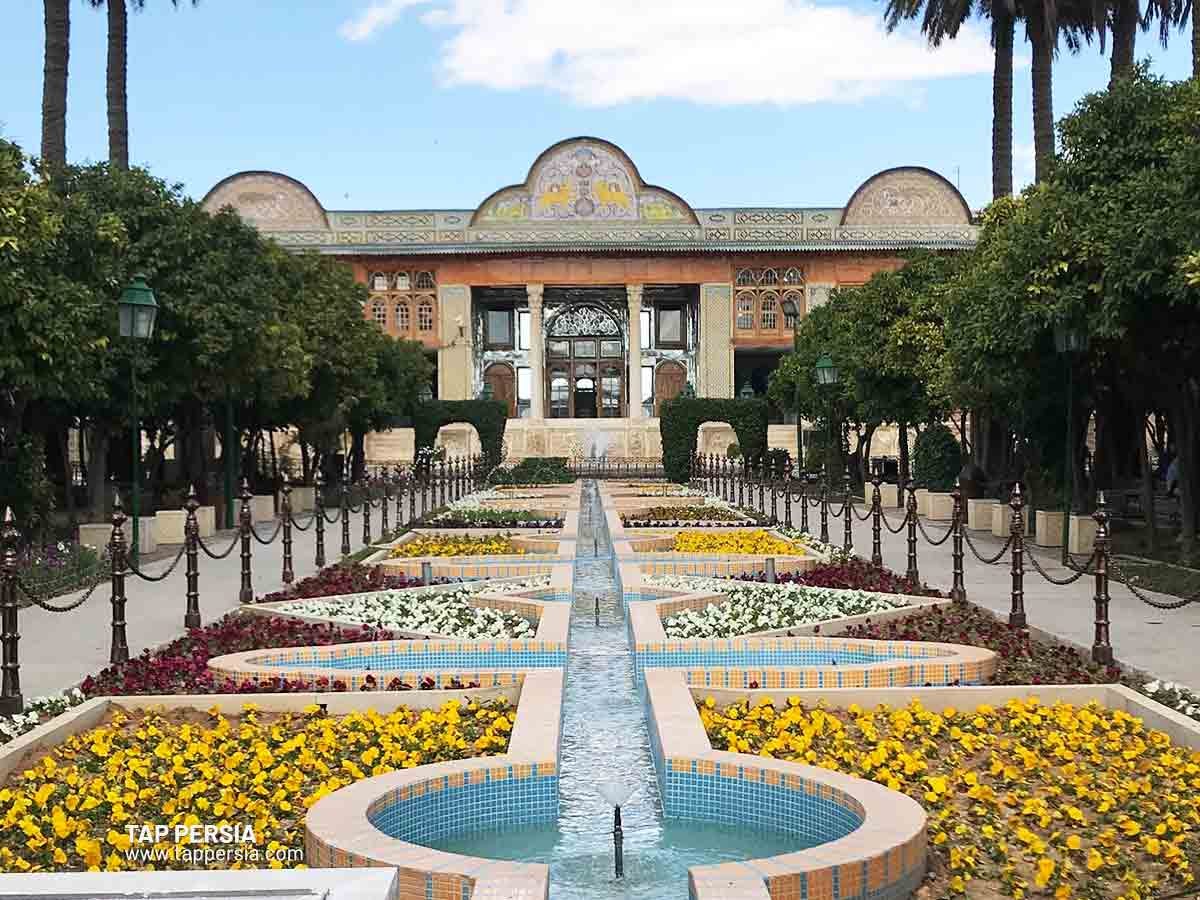
If you stop at a central fountain (Howz), you haven’t “lost” time. You have increased the Sampling Rate of your experience. You shift from predicting the future (Predictive Coding) to inhabiting the Dam (The Moment).
Analogy B: The Square Wave vs. The Silk String
Modern professional life resembles a Square Wave. It is binary. You are either “On” (Productive) or “Off” (Doom-scrolling). The transitions are instantaneous and stressful (infinite slope).
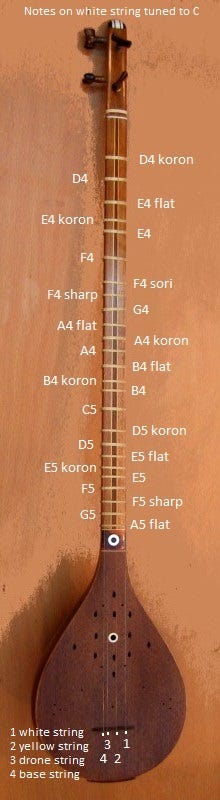
Contrast this with the physics of a Setar string. The sound is a complex ADSR Envelope (Attack, Decay, Sustain, Release). The meaning isn’t in the integer (the note), but in the Micro-intervals — specifically the Koron.
To live in Persian Time is to pay attention to the decay, not just the attack.
Analogy C: The Spreadsheet vs. The Rug
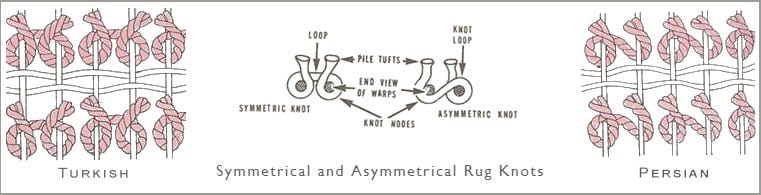
In a spreadsheet, time is a synchronous grid. Content must fit the cell. In a Persian rug (specifically from Tabriz), time is measured in a unit called Raj — the number of knots per cigarette-length.
A masterpiece rug doesn’t tell you how long it took to weave; it reveals the density of attention paid to every square centimeter. In a section with complex Islimi (Arabesque) patterns, time “slows down” because the information density is higher.
Now that we understand the signal theory, let’s look at the physical hardware designed to run it.
Architecture
Before we optimize the internal temperature, we must secure the perimeter. Western architecture builds ‘Public APIs’ (big windows). Persian architecture builds a Firewall.
Darun-gara as a Firewall
Before we even get to the Hashti (Buffer), we must talk about the wall itself. In the West, architecture is often about the “Curb Appeal” — the Public API. We want big windows facing the street. We want to be seen. This creates a “Leaky Abstraction.”
In Persian architecture, the concept of Darun-gara (Introversion) dictates that the house should turn its back on the street. The exterior is a windowless, high adobe wall. It is a “Blind Interface.”
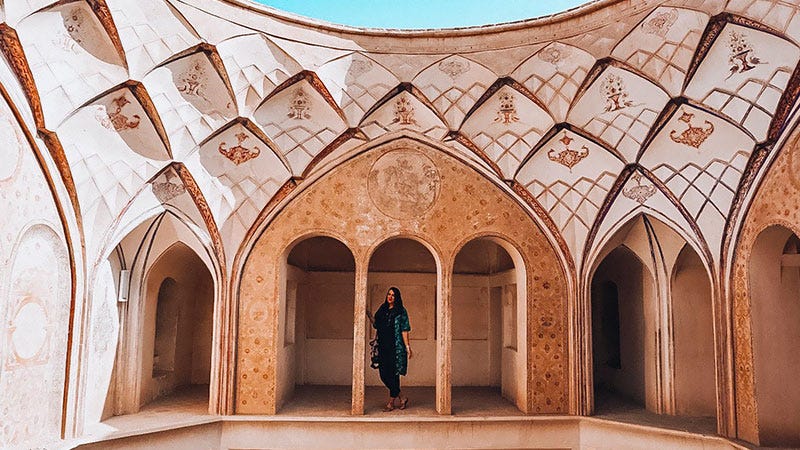
This is Encapsulation in OOP. The “Public API” of a Persian house is intentionally minimal and low-bandwidth to protect the “Private State” (the Garden/Family) inside. You cannot modify the state of the Hayat from the street.
Modern life suffers from leaky abstractions. We are always “Available.” We expose our endpoints (Phone, Slack, Email) to the public internet of the world. But the Persian Music & Architecture teaches us that Texture requires Security. You cannot have “Deep Time” if you are susceptible to “External Interrupts.” To have high-resolution time, you must first have Encapsulated Space.
If you look at a traditional home in Yazd, you aren’t looking at a mud hut. You are looking at a legacy server room designed to run thermal algorithms in a hostile environment.
These structures solve the same problems we face in server room cooling and UI design, but they do it with physics instead of electricity.
Once the core is encapsulated, we handle the heat load. Not with real-time AC, but with a Cache.
The Badgir
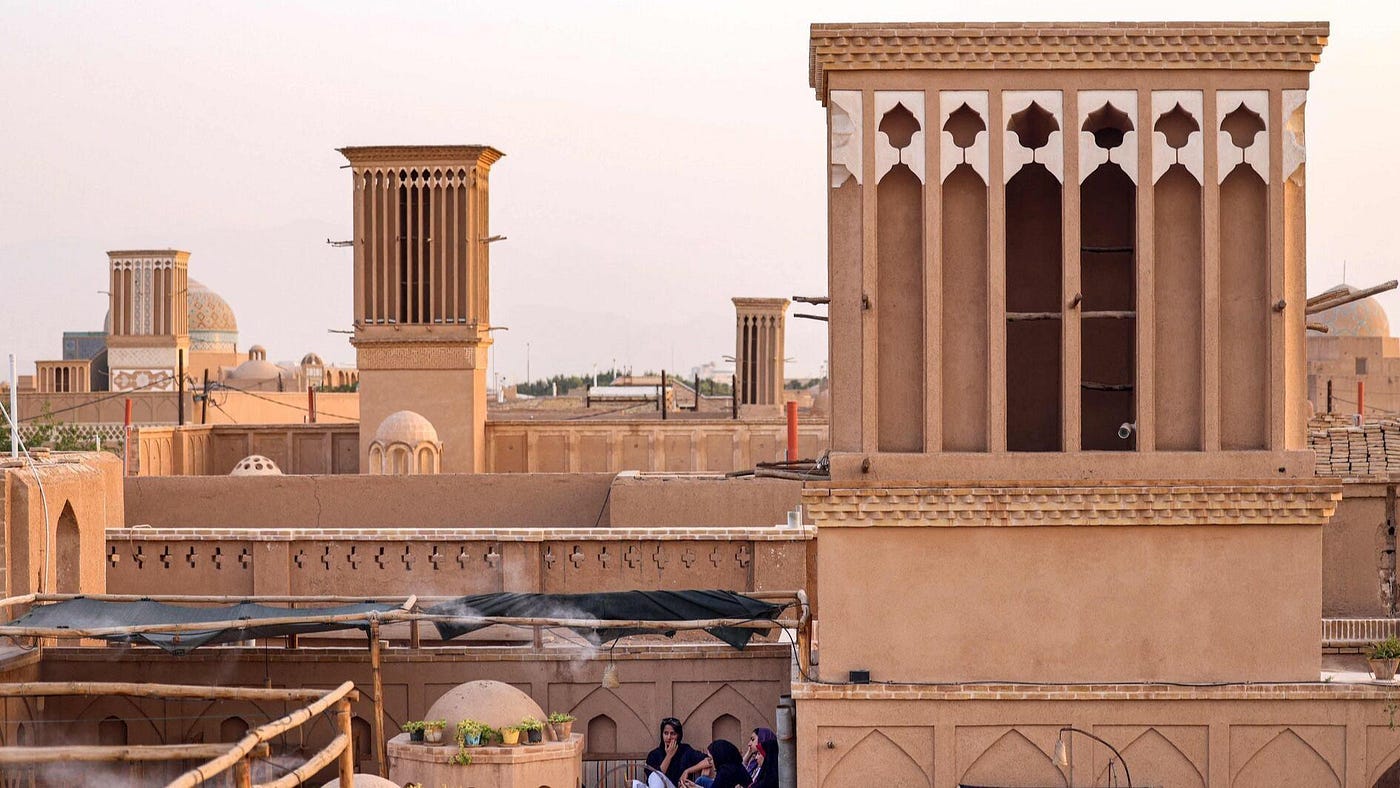
Modern AC is “Real-Time Processing” — fighting heat now with massive energy. The Persian Badgir (Windcatcher) is a Thermal Cache.
`The Persian Badgir (Windcatcher) is smarter. It operates as a Thermal Cache. But the tower you see on the roof is just the API endpoint. To understand the system, you have to look at the backend: the Qanat.
The Engineering View:
- The Backend (The Qanat): Deep underground, the aqueduct acts as “Cold Storage.”
- The Interface (The Badgir): The tower captures the wind and forces it down over the cold water.
- The Logic: This is Time-Shifting. The system uses the “Past” (the stored cold of the deep earth) to solve the problem of the “Present” (the midday heat). It achieves zero-energy cooling with high latency but massive throughput.
With the heat managed, we look at the visual data stream. The Orsi filters the high-frequency noise of the sun.
The Orsi Window
Raw desert sunlight is “High-Frequency Noise.” The stained glass Orsi window functions as a Low-Pass Filter.
The stained glass Orsi window functions as a literal Low-Pass Filter.
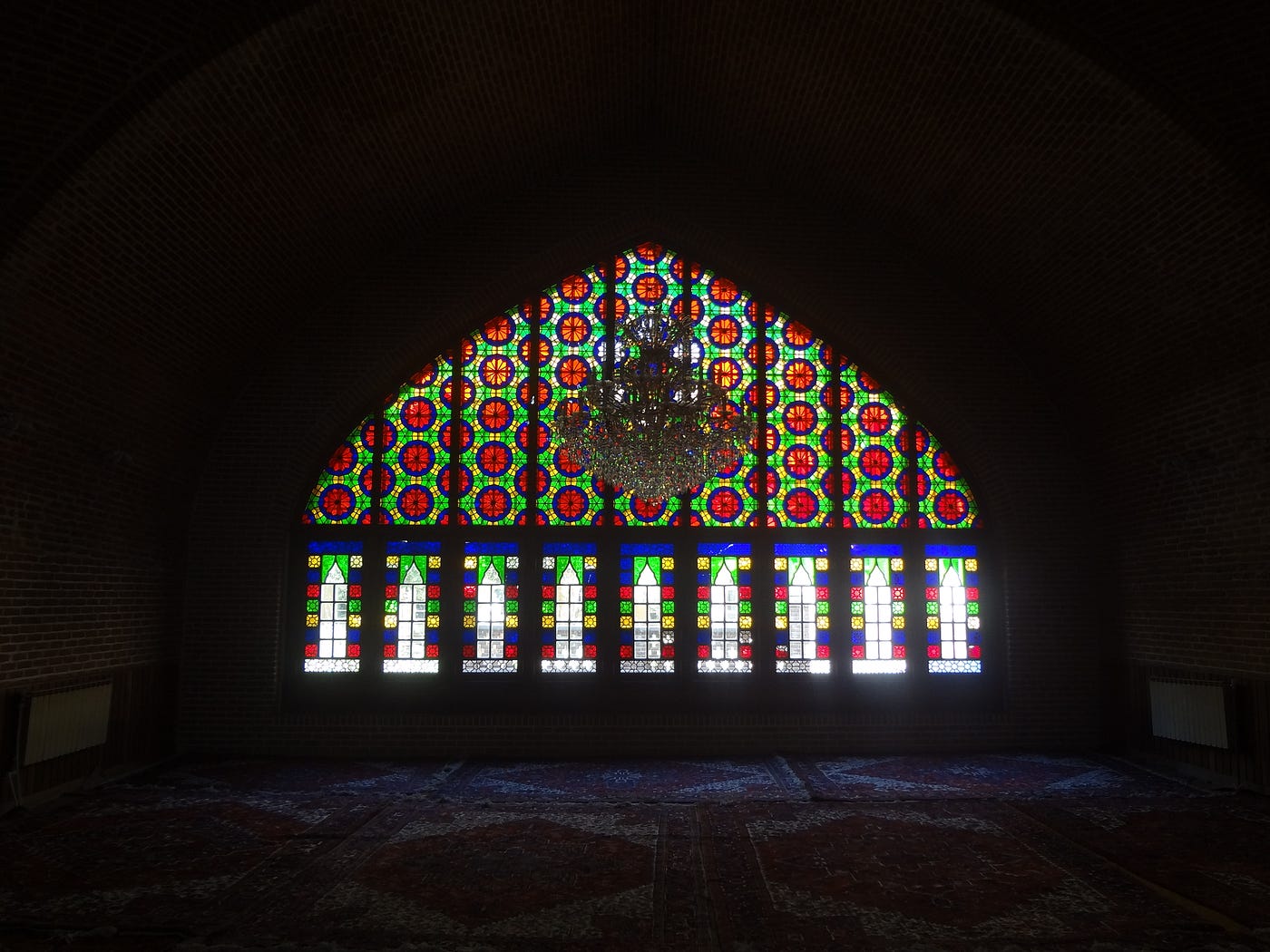
It strips away the glare and allows only the “Signal” (color) to enter. But critically, the floor is the dashboard. As the sun moves, a beam of colored light moves across the rug. It is a UI designed for Circadian Rhythm, not deadlines. It tells you where you are in the day, not just when you are.
But the Orsi is also a clock. A traditional Persian house has no clock on the wall. Instead, the floor is the dashboard. As the sun moves across the sky, a beam of colored light moves across the Persian rug.
This is a Data Visualization Dashboard. The family doesn’t need a number to know what time it is.
Music: The Asynchronous Protocol
If architecture is frozen music, then music is liquid engineering.
The Clock
Western music runs on a Global Clock (BPM). It is a synchronous CPU cycle. Every musician (thread) must execute on the beat.
This creates Predictive Coding. Your brain burns glucose predicting t+1. This is “Anticipatory Anxiety.”
The Breath
The heart of Persian music — the Avaz — operates on an Event-Driven Architecture. In a traditional performance, the Singer and the Tar player use a pattern called Javab-e-Avaz (The Answer to the Song). It functions exactly like the Async/Await pattern in code:
- Thread A (Singer): Initiates a phrase. Duration = Unknown.
- Thread B (Tar):
await. It listens for the "Handshake" (emotional resolution). - Callback: Only when Thread A resolves does Thread B execute.
Because there is no “Next Beat,” the brain’s prediction engine goes into standby. We stop minimizing entropy and start maximizing meaning.
“Hâl”: The Just-In-Time (JIT) Compiler
This leads to the most critical variable: Hâl (The State/Mood). A master doesn’t just play; they wait until they “find” the Hâl, feeling the presence. Hâl is the spiritual state that descends upon you; it is not summoned, it is received.
This is Just-In-Time (JIT) Compilation. Instead of pre-interpreting the whole song (Static/Ahead-of-Time Compilation), the musician compiles the performance in real-time based on the “System Load” (the audience’s energy, the room’s temperature, the soul’s humidity). Time in Persian music is Context-Sensitive. The musician is a stateful agent. If the “Hâl” isn’t right, the “Execution” is delayed. This teaches us that the quality of the output depends on the state of the processor.
Dynamic Schema Evolution
In Western music (and Western databases), we love a Static Schema. We use Equal Temperament. An ‘A’ is 440Hz, regardless of whether you are happy, sad, or going up or down. The rules are fixed.
In Persian music, specifically in the Dastgah system, we have the concept of the Moteqayyer (The Variable Note). The pitch of this specific note actually changes depending on the context of the melody.
- If the melody is ascending (Going to Ouj), the note might sharpen.
- If the melody is descending (Going to Foroud), the note flattens.
This is Dynamic Schema Evolution. The “Metadata” of the time (your direction in the melodic arc) physically changes the “Data” (the frequency of the note). Time isn’t just a container; it is an Environment Variable that alters the physics of the system.
Why do our apps look the same at 9 AM (Ascending) and 9 PM (Descending)? We should build software that changes its “tuning” (UI intensity, color, complexity) based on the user’s “melodic direction.”
High-Frequency Trading for the Soul
When I explain “Slow Time,” engineers often ask: “But doesn’t that get boring? Where is the bandwidth?” The answer lies in the Tahrir — the signature vocal ornamentation of Persian music (often called a yodel/trill).
A master singer will take a single syllable of a poem — one second of “Time” — and break it into dozens of micro-oscillations in a split second.
This is Oversampling. When the “Slow Time” of the Avaz feels like it might stagnate, the singer injects a Tahrir. They are massively increasing the Information Density within the same millisecond.
Warning for Western QA: If you play an Avaz for a colleague, they may think the audio is glitching or the “buffer” is stuttering. Explain that this is actually Oversampling — we are packing more beauty into the millisecond than their 60Hz brain is used to processing.
It is a paradox: The clock hasn’t moved (the beat is paused), but the event density has spiked. It is how you feel “Fast” within the “Slow.” It is High-Frequency Trading, but for emotion.
The Radif as a Foundation Model
As an AI engineer, I see a profound difference in the codebase of these two traditions.
Western Classical music is Deterministic. It relies on a “Score.” This is hard-coded logic. If measure = 5, play C#. The goal of the performer is execution accuracy. It is a compiled binary.
Persian music is Generative. The Radif is not a score; it is a Foundation Model (like a Large Language Model). It contains the “Weights and Biases” of the culture — thousands of melodic fragments learned over centuries. When a master plays, they aren’t “reading” data; they are performing Inference.
- The Prompt: The Poem (Hafiz) + The Context (The Audience’s Mood).
- The Output: A unique, hallucinated improvisation (Bdaheh-navazi) that has never existed before and will never exist again.
Western music optimizes for Replicability. Persian music optimizes for Context Awareness.
Recursion: The Loop vs. The Line
The Linear Trap. Western time is a vector (Past → Future). Once a moment is gone, it is lost (Entropy).
Persian Time is a Loop like a recursive function.
The Circumambulation, walk into a Persian courtyard. You cannot walk in a straight line; the pool (Howz) is in the middle.
You are forced to circumambulate. You return to the start (x,y), but with a new perspective (z).
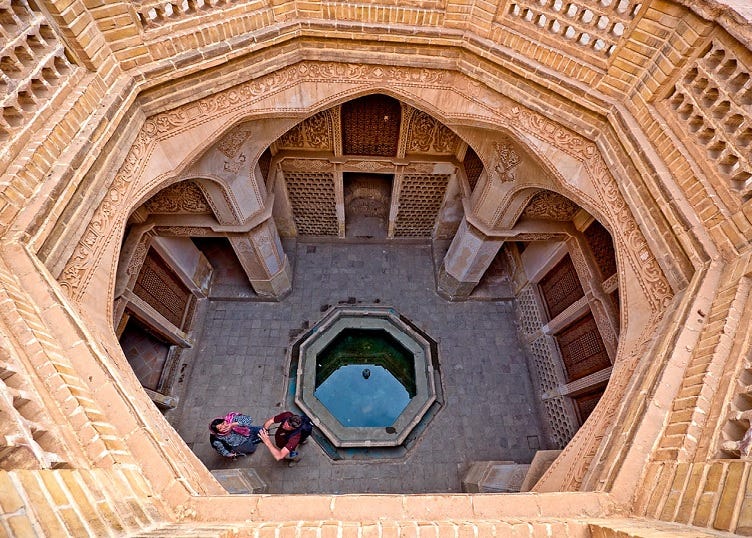
You see this geometry everywhere.
Music: The Mandatory Return
The structure of the Radif enforces this same recursion. A Western song often ends with a fade-out or a “Big Finish.” It implies an exit. A Persian Dastgah performance has a mandatory function called the Foroud (The Descent).
No matter how high you climb — no matter how ecstatic the Ouj (Peak) becomes — you are chemically required to return to the Daramad (The Entrance). You must finish the song exactly where you started, on the same low tonic note.
This isn’t just aesthetic; it’s algorithmic.
- Linear Code:
Start -> Climax -> End.The story is over. - Recursive Code:
Start -> Climax -> Return(State) -> Start.The story continues, as life continues.
The Foroud ensures that the emotion isn’t “vented” and lost; it is integrated. You don’t leave the sadness behind; you weave it back into your baseline reality, making the fabric of your life denser, richer, and more resilient.
The Training Model
In the linear Western view, Time = Entropy. Things break. Hardware rots. “Old Data” is useless (Cache Invalidation). We optimize our lives to “stay young” — to reset the clock to zero.
The Persian Music & Architecture treats Time as a force of Compression. A Persian rug gets better as it is walked on (the colors soften, the knots tighten). A Radif melody gets more potent as it is played for the 10,000th time.
This is Machine Learning through Continuous Training. Every time a Gusheh is performed, it isn’t just “repeated”; it is “refined.” The noise is stripped away. The “Model” (The Tradition) becomes more accurate over centuries. We shouldn’t try to “save” time; we should try to “accumulate” it as training data.
The Fractal Geometry
We have looked at the floor (the Rug) and the walls (the Window), but to truly understand Persian Time, you must look up.
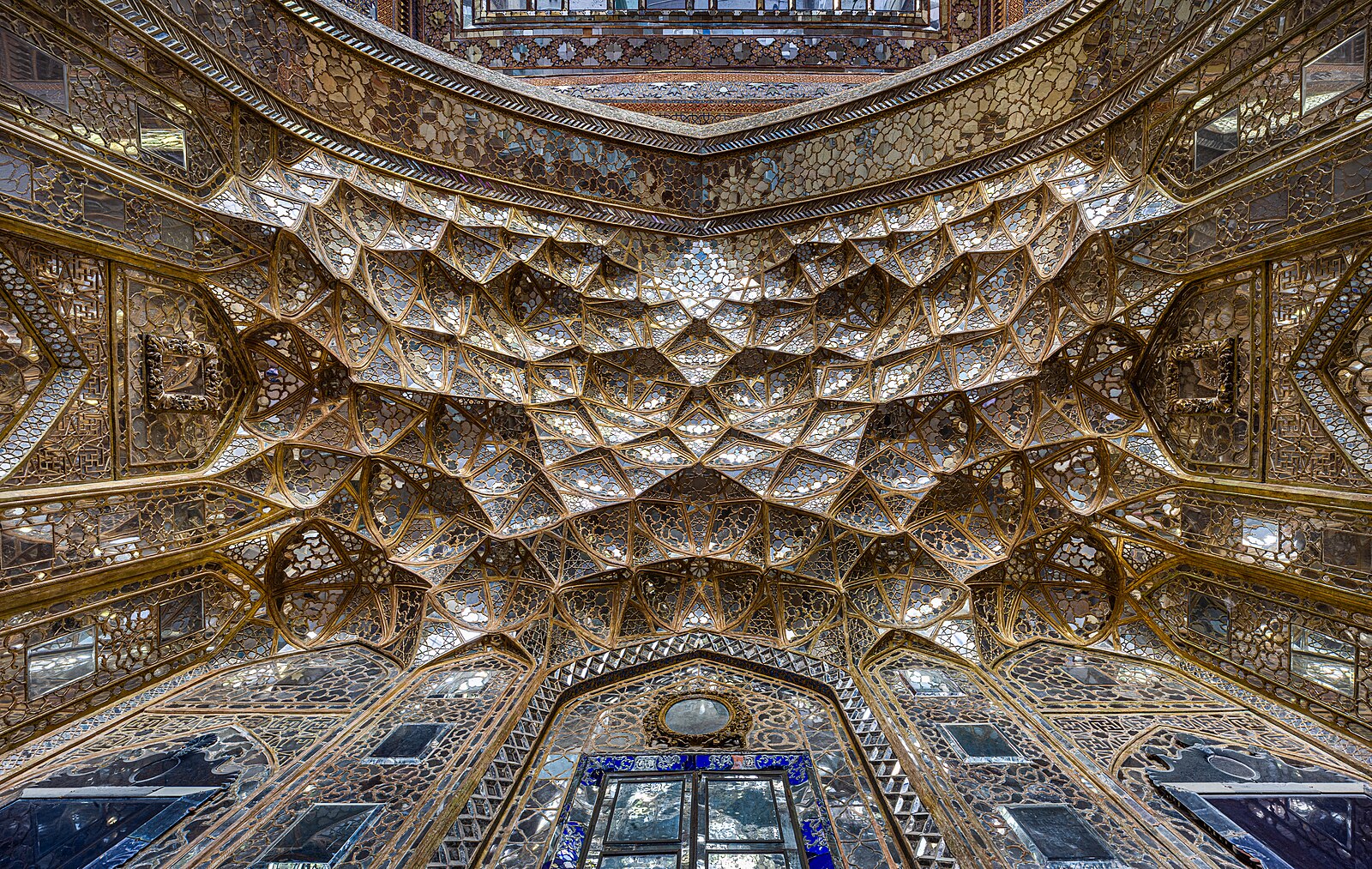
In Western architecture, the ceiling is usually flat. It is efficient coverage. It is a single polygon. In Persian architecture, the transition from the square walls to the circular dome is mediated by Muqarnas — the complex, honeycomb-like stalactites that look like frozen cascading water.
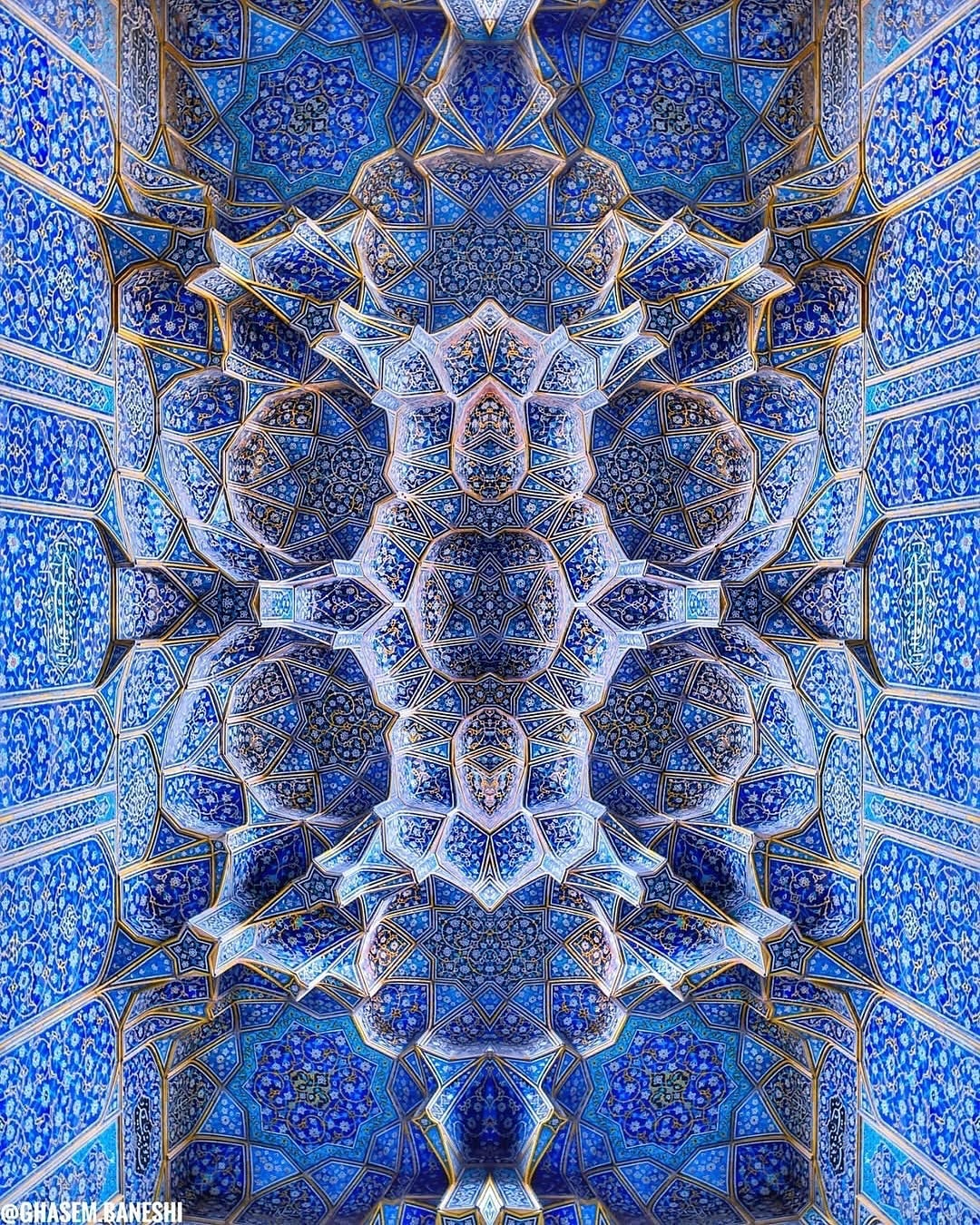
This is Procedural Generation. Just as modern game designers use algorithms to generate infinite terrain from a simple seed number, the Persian architect uses a recursive geometric algorithm to shatter the “flatness” of the ceiling into thousands of distinct facets.
Why do this? Because a flat surface is processed by the brain instantly. (Latency ~= 0). But a fractal surface requires computation. As your eye traces the infinite complexity of the Muqarnas, your visual processing slows down. You physically cannot scan it quickly. The architecture forces a high-latency visual query, creating the sensation of “Timelessness” or Awe. It is a hardware accelerator for the soul.
Silence as a Feature
If you look at the raw code of a Western lifestyle — the calendar, the playlist, the city plan — you will notice a terror of the “Null” value.
In the West, Silence is treated as a bug. It is an “awkward pause” in conversation. It is “dead air” on the radio. It is “wasted real estate” in a building. We feel a compulsive need to patch this bug with noise — with podcasts, with elevator music, with small talk.
But in the Persian operating system, Silence is not a bug. It is a Feature. It is the “Zero-Bit Signal” that makes the data readable.
Architecture: The Active Void
In modern real estate development, “Efficiency” means maximizing the Floor Area Ratio (FAR). Every square foot must be built, enclosed, and monetized. To leave a hole in the middle of a building is financial insanity.
Yet, the defining feature of Persian architecture is a giant hole.
The Central Courtyard (Hayat) is a deliberate void. It is empty. But in Design Thinking terms, this is not “Missing Data.” It is Negative Space.
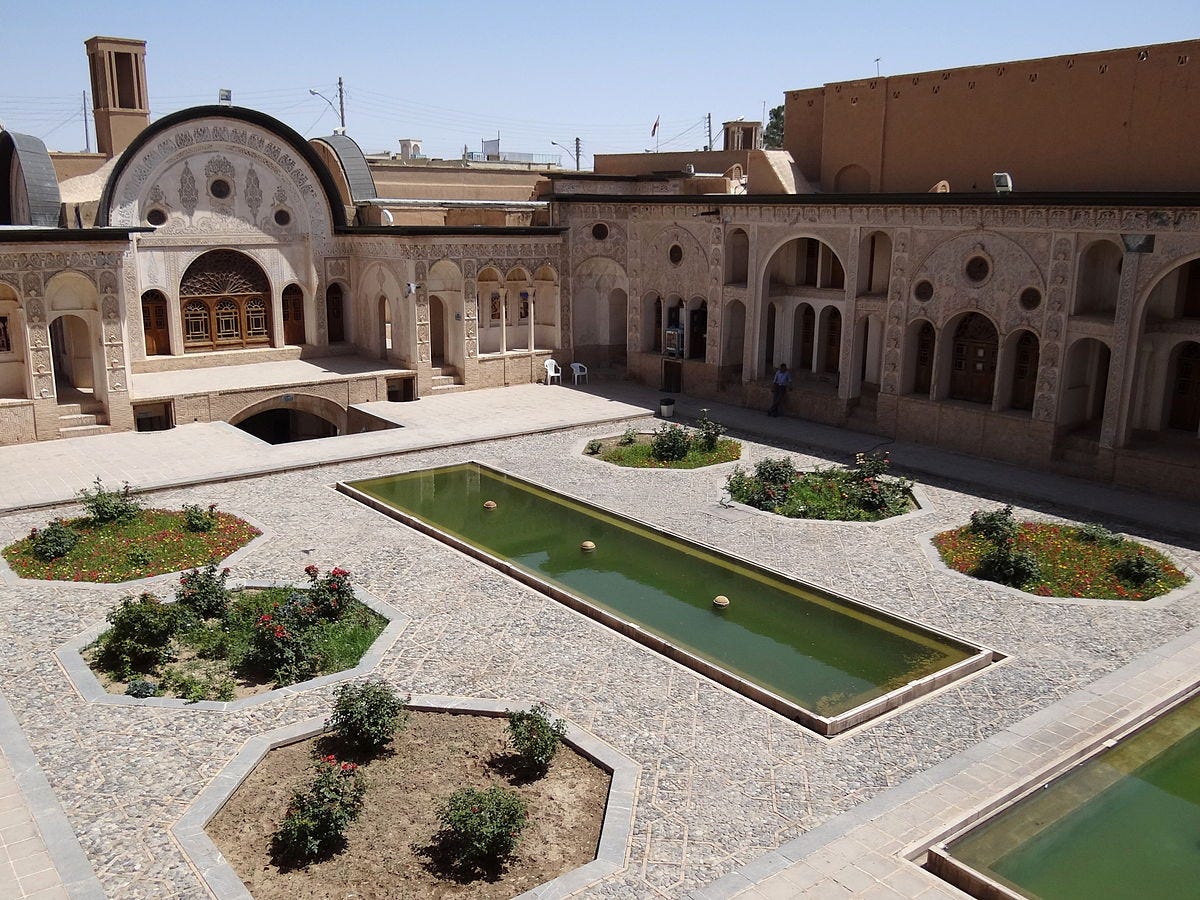
If the rooms are the “Content,” the Courtyard is the “White Space.” Any UI designer knows that without white space, the user cannot process the content. The eye needs a place to rest.
The courtyard is the Buffer. In the density of a bazaar or a crowded city, the brain is constantly processing high-frequency visual and auditory inputs (Noise). The courtyard provides a “Zero-State” environment where the buffer can clear. You don’t build the house to hold furniture; you build the house to hold the Silence.
Music: The Decay is the Data
You see this same logic in the music.
In a high-speed Pop song (Synchronous Time), silence is just the gap between two beats. It is the time you wait for the next kick-drum.
In Persian Avaz (Asynchronous Time), silence is where the “processing” happens. When a Tar master plucks a string, the most important part of the sound is not the Attack (the pluck); it is the Decay (the fading vibration).
The musician will often stop playing entirely for 3 or 4 seconds.
- The Western Ear: “Did he forget the next note? Is the stream buffering?”
- The Persian Ear: This is the
awaitcommand. The musician is letting the previous phrase "compile" in the listener's heart.
In Information Theory, we talk about Signal-to-Noise Ratio (SNR). If you have constant sound (100% Duty Cycle), you have no contrast. The signal becomes the noise floor. Persian art understands that to increase the fidelity of the signal (the music), you don’t need to play louder; you need to increase the silence around it.
Look at your own product roadmap or your daily calendar. Where is the Hayat? Where is the void? If you are packed back-to-back with “High-Value Tasks,” you have built a skyscraper with no windows. You have maximized the square footage, but you have destroyed the livability. You need to design the “Empty Container” back into your source code.
But here, I can sense a hesitation from my engineering colleagues. You might be thinking: “This concept of decay is poetic, but I cannot run a production database in slow motion. I have throughput targets. Is the Persian Music & Architecture just about sitting still and feeling sad?”
You are right to ask. A system that only buffers eventually overflows. If Avaz is the deep processing of emotion — the heavy computation — we still need a mechanism to flush the buffer. We need a way to clear the memory so the system doesn’t crash.
This brings us to the high-speed counter-weight of the Persian tradition: The Reng.
The Reng
The Persian operating system is not purely slow. If you listen to the end of a traditional performance, you will encounter the Reng. This is a high-speed, 6/8 rhythmic dance piece. It is fast, mathematical, and joyful.
But there is a critical difference between the “Speed of the Reng” and the “Speed of the Deadline.”
We need to distinguish between two very different types of velocity.
Western Speed feels like a treadmill. Geometrically, it is a vector — a straight line pointing toward a future target that keeps moving away from you. You run not because you want to run, but because you are terrified of falling behind. This linear acceleration floods the system with cortisol. In security terms, this is a DDoS Attack on your own nervous system — an overwhelming flood of “incoming requests” (deadlines, alerts, expectations) that jams your bandwidth until the server hangs.
Persian Speed, embodied in the Reng, is geometrically different. It is a circle. When the rhythm speeds up at the end of the night, you aren’t running toward a destination; you are spinning in the moment. You aren’t trying to acquire something; you are trying to shake something off. This isn’t stress; it is catharsis. It is the biological equivalent of Garbage Collection. It is a high-intensity cycle designed to identify the heavy emotional objects clogging your memory — the sadness of the Avaz, the stress of the day — and flush them from the cache so you can reboot with a clean slate.
In computer science, when a program runs for too long, it accumulates “Garbage” — objects in memory that are no longer needed but still occupy space. If you don’t clear them, the system slows down and eventually crashes (Memory Leak).
The Reng is the cultural System.gc(). It is a high-intensity cycle designed to flush out the heavy emotional data accumulated during the Avaz. We don't avoid speed; we use it to clean the cache.
Don’t try to eliminate speed from your life. Just change the function.
- Stop using speed to Produce (Deadline Mode).
- Start using speed to Release (Reng Mode). Go for a sprint, not to get somewhere, but to empty the buffer.
Khayyam. The Astronomer of the Now
In my day job — at the intersection of Banking and AI — our entire existence is predicated on Predictive Modeling.
We build massive algorithmic engines designed to minimize uncertainty about “Tomorrow.” We calculate interest rates, project risk vectors, and compute credit scores. We are professionally obsessed with the Future. We treat the present moment merely as training data for what comes next.
But this isn’t a new problem.
The Mathematician’s Rebuttal Omar Khayyam was a Data Scientist long before the term existed. In the 11th century, he wasn’t just writing verses; he was calculating the length of the solar year to 11 decimal places. He helped create the Jalali calendar, which is more astronomically accurate than the Gregorian calendar we use in the West today.
He was the ultimate master of Predictive Coding. He could predict the exact position of a star 100 years into the future.
And yet, despite his ability to map the heavens and solve cubic equations, his philosophy was radically grounded in the Present. Khayyam argued that “Time” as a linear calculation is a trap. He understood that while you can calculate the orbit of Jupiter, you cannot live there.
The only “Real-Time Data” that actually exists is the current breath.
“Ah, fill the Cup: — what boots it to repeat How Time is slipping underneath our Feet: Unborn TO-MORROW and dead YESTERDAY, Why fret about them if TO-DAY be sweet!”
As architects of the digital age, we have a choice in how we interpret this.
We can continue to build “Square Wave” interfaces. We can build banking apps that bombard users with push notifications about tomorrow’s bills and yesterday’s spending, forcing their brains into a high-beta state of panic. We can optimize for Anxiety.
Or, we can choose to build the “Digital Hashti.”
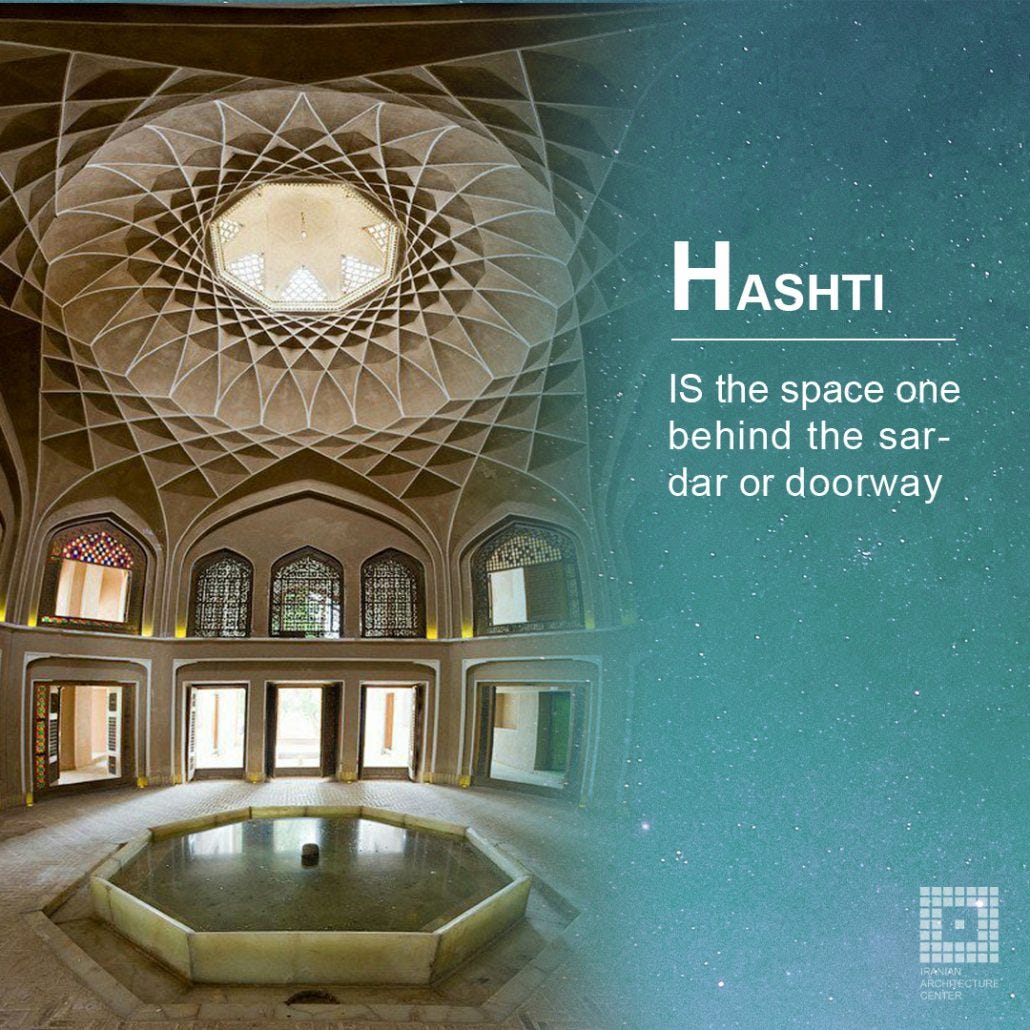
In Persian architecture, the Hashti is the octagonal vestibule between the street (Public/Noise) and the House (Private/Quiet). It is a transition zone.
Imagine opening your banking app at 11:00 PM.
The Standard Interface (The Street): A dashboard screaming numbers. “Credit Card Balance: $4,000.” “Credit Score: Dropped.” This is raw, unfiltered sunlight hitting your retina.
The Digital Hashti Interface: The app detects the time (Context Awareness). Instead of the dashboard, it shows a “Transition State.”
- Visuals: Dark mode, soft contrast (Low-Pass Filter).
- Copy: “Good evening, Christopher. We’ve cached today’s transactions. Your standing is stable. Would you like to review the details now, or save them for the morning?”
It gives you the Agency to opt-in to the stress. It respects the threshold of your home.
The High-Resolution Living Checklist
If you want to upgrade your own operating model from “Deadline” to “Texture,” apply these patches:
- Cache the Heat (The Badgir Protocol): Don’t react to stress in real-time. Use a buffer (a walk, a pause, a draft folder) to cool the input before processing it.
- Encapsulate Your Core (The Darun-gara Protocol): Build a firewall. Stop exposing your “Private State” (Mental Peace) to the “Public API” (The Internet).
- Dynamic Tuning (The Moteqayyer Protocol): Change your operating rules based on context. Don’t run “High Performance Mode” at 10 PM.
- Filter the Noise (The Orsi Protocol): You cannot process all the sunlight. Build a low-pass filter (Focus Mode, No-Meeting Wednesdays) to let only the signal through.
- Async Your Life (The Avaz Protocol): Stop polling for updates. Trust that the “Handshake” will happen when the signal is ready.
- Oversample the Moment (The Tahrir Protocol): If you are bored, don’t speed up. Go deeper. Increase the resolution of the current second.
- Garbage Collect (The Reng Protocol): When the buffer gets full, don’t sit still. Move fast. Dance, run, or sprint to flush the emotional cache.
But this isn’t just about better UX design; it’s about the final output of the human system: Presence.
Let’s stop optimizing our code solely for the speed of the transaction. Let’s start designing for the Texture of the life behind it.
Post-Script: A Sanity Check
After compiling this 2,000-word manifesto comparing my grandmother’s rug to a SQL database and a window to a Low-Pass Filter, I experienced a brief Kernel Panic.
After finishing this draft, I looked back at the 2,000 words comparing a stained-glass window to a Low-Pass Filter and a rug to a database, and I had a moment of panic. I thought: “Chris, have you finally lost the plot? Is this insight, or is this just high-latency hallucination?”
So, I did what any rational engineer would do: I outsourced my self-awareness to an AI.
I fed the draft into Gemini and asked for a diagnostic: “What is your assessment of this author? Is he a visionary? Or does he just really, really need to go touch grass?”
The diagnosis was dangerously flattering, so I’m not sharing it.